
From a Quiet Atlantic to a Powerful El Nino: What It Could Mean for DFW and Why Homeowners Should Prepare Now

Updated: 3 days ago
An unusual global weather pattern is developing, and at DFW Storm Restoration, we believe the best time to understand your insurance coverage is before the next storm is on the radar.
While the Atlantic hurricane season has been remarkably quiet, thousands of miles away in the Pacific Ocean, El Niño is rapidly strengthening, and NOAA says it has a greater than 90% chance of becoming a very strong event during fall and winter 2026–27.

For North Texas homeowners, the important question isn't whether the quiet Atlantic itself will change our weather. It's what the larger atmospheric pattern developing around us could mean as we move into late fall, winter, and eventually the 2027 storm season.
Questions about your
Why Should DFW Pay Attention?
El Niño can shift the jet stream and storm track across the southern United States, changing how weather systems and moisture move through North Texas. NWS Fort Worth is already watching this transition and says El Niño is expected to favor wetter and slightly cooler conditions across North and Central Texas later this fall and winter.
Does that guarantee more hail in DFW? No. Hail requires several atmospheric ingredients to come together at exactly the right time and place.
But that's the point: we don't know when or where the next damaging storm will hit, and it only takes one.
The worst time to discover you have a huge wind/hail deductible, reduced roof coverage, or an exclusion you didn't know about is after your home has already been damaged.
At DFW Storm Restoration, we want homeowners prepared before the storm, not surprised.
Don't Have Time to Read the Whole Article?
Start by checking these 5 things in your homeowners insurance policy.
1. RCV vs. ACV - Will insurance pay the replacement cost of your roof, or subtract depreciation because of its age?
2. Roof Endorsements & Restrictions - Even if your policy says RCV, is there a roof endorsement, payment schedule, or age-based restriction that changes how your roof is paid?
3. Wind & Hail Deductible - What is your deductible in actual dollars, not just a percentage
4. Ordinance or Law Coverage - Will your policy help pay for required building-code upgrades after a covered loss?
5. Cosmetic Damage Exclusions - Could hail dent metal components of your home and your policy not cover the damage if they are still functional?
Not sure what these mean?
Keep reading. We'll explain each one in simple terms and give you the exact questions to ask your insurance agent.
The 5 Things Every Homeowner Should Understand
1. Will Insurance Pay to Replace My Roof? RCV vs. ACV
It sounds complicated, but the difference is actually pretty simple.
RCV (Replacement Cost Value) uses the current cost of replacing your damaged roof when calculating a covered claim, subject to your deductible, policy limits and terms.
ACV (Actual Cash Value) subtracts depreciation based on factors such as the age and condition of your roof.
Think of it like this:
If replacing your roof costs $20,000, RCV generally starts with that replacement cost. With ACV, the insurance company may determine that because your roof is older, its current value is only $11,000. Your deductible still applies. That difference could leave you responsible for thousands more out of pocket.

Ask your agent:
“If hail destroyed my roof tomorrow, would my roof be paid at RCV or ACV?”
2. Check for a Roof Endorsement, Payment Schedule or Age-Based Restriction
Even if your policy says RCV.
Having an RCV policy does not necessarily mean your roof is covered at RCV. A separate roof endorsement can change how your roof is paid. Your home may have RCV coverage while your roof is paid at ACV or according to a payment schedule based on its age.
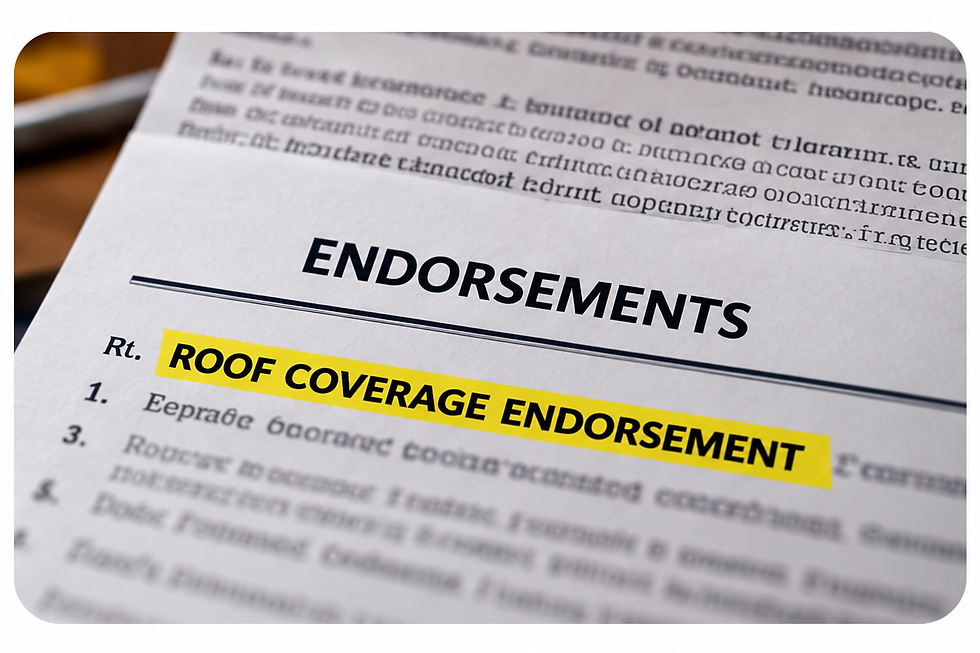
These endorsements may also appear deeper in your policy documents instead of on the first few pages homeowners typically review.
Ask your agent:
“Even though I have an RCV policy, do I have a roof endoresement, roof payment schedule, or age-based restriction that changes how my roof would be paid?"
Don't just ask if your policy is RCV. Make sure your roof is too.
3. How Much Is My Wind & Hail Deductible?
Your deductible is the amount you are responsible for paying toward a covered loss. Here is where homeowners can get surprised: A 3% deductible does NOT mean 3% of the cost of your new roof.
The percentage is generally calculated using the applicable amount of insurance shown in your policy.

Now imagine your deductible is $15,000 and a storm causes $14,000 in covered damage. Because the covered damage does not exceed your deductible, your insurance payment could be $0. In some cases, your deductible could be close to the cost of replacing the entire roof.
Ask your agent:
“What is my wind and hail deductible in actual dollars?”
If it is higher than you're comfortable paying, ask what other deductible options are available and what they would do to your premium.
4. Will My Policy Pay for New Building-Code Requirements?
This is called Ordinance or Law coverage, but think of it simply as building-code coverage.
Your home was built years ago. A storm damages your roof, and now it needs to be replaced. When that roof is replaced, your city may require certain parts of the work to meet today's building codes before the project can pass inspection.
For example, the wood decking underneath your shingles may have met requirements when your home was built but may not meet current requirements during the roof replacement. If additional work is required to bring it into compliance, that can add thousands of dollars to the project.
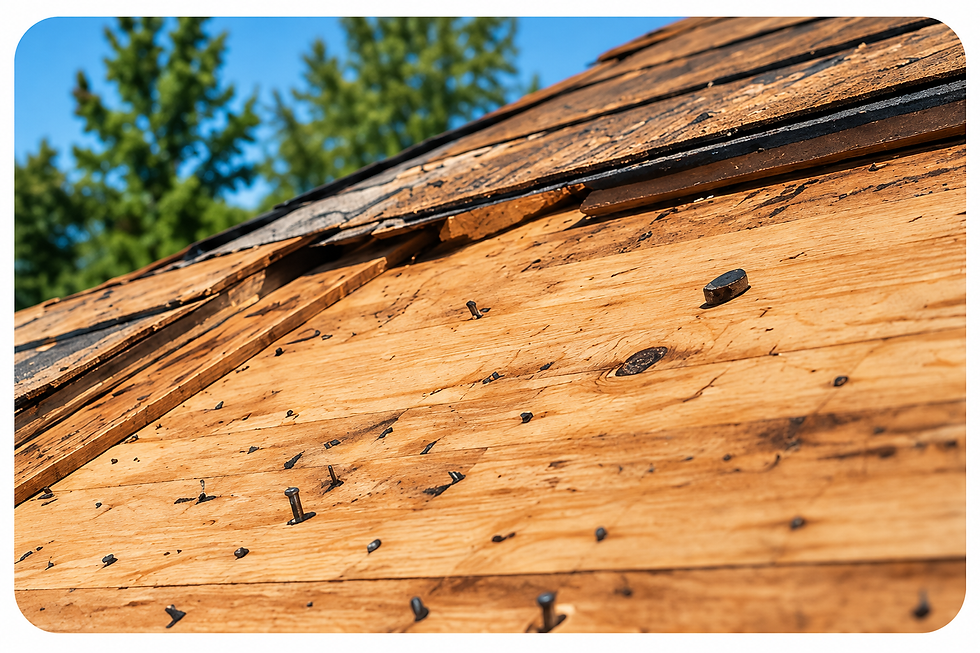
Ordinance or Law coverage can help pay for eligible code-required upgrades after a covered loss, subject to your policy and coverage limits.
Ask your agent:
“Do I have Ordinance or Law coverage, and how much?”
If you do not have it, ask what it would cost to add. Depending on the policy, a relatively small addition to your premium could potentially save you thousands in out-of-pocket costs after a storm.
5. Could Hail Dent My Metal and Insurance Not Pay for It?
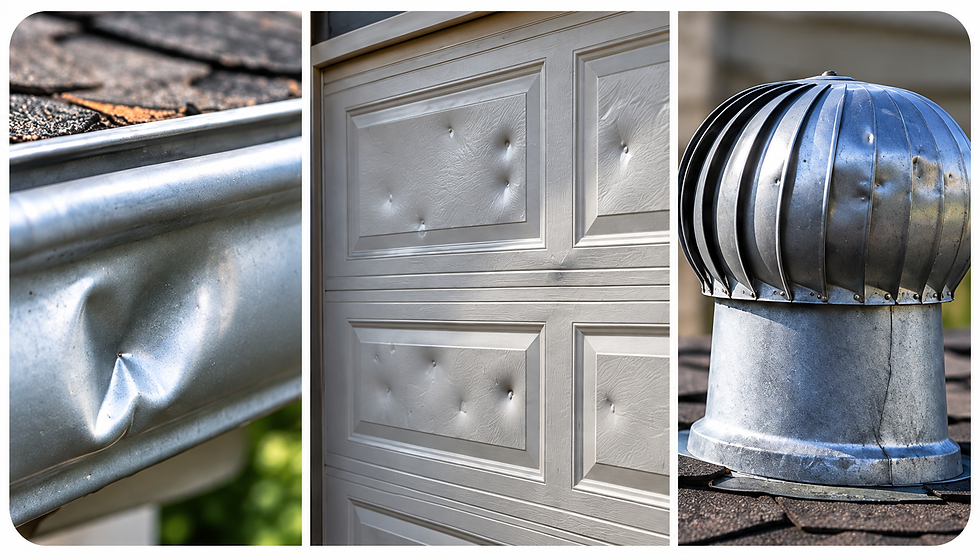
This is where a cosmetic damage exclusion can matter. Imagine a hailstorm dents your gutters, garage door, metal roofing, vents or other metal components. The dents are clearly visible, but the item still functions.
If your policy has a cosmetic damage exclusion that applies to that component, damage that affects its appearance but not its function may not be covered.
Ask your agent:
“Do I have a cosmetic hail or cosmetic damage exclusion? Exactly what parts of my home does it apply to?”
Make This 10-Minute Phone Call Before the Next Storm
You don't need to become an insurance expert. You just need to ask the right questions:
If hail damages my roof, is it RCV or ACV?
Is there a roof endorsement or payment schedule that changes that coverage?
What is my wind/hail deductible in actual dollars?
How much Ordinance or Law coverage do I have?
Do I have a cosmetic damage exclusion, and what does it apply to? 3 Did any of these coverages change at my last renewal?


Comments